By hiring tree removal and landscaping professionals, you safeguard your Rochester Hills estate through their capacity to spot decay, support cracks, unsafe lean, root damage, and canopy threats before failure develops. These professionals will assess whether pruning can correct localized defects or whether controlled removal offers the safer approach. After removal, they can address grading, drainage, soil compaction, stump handling, and replacement planting to rebuild function and curb appeal. Explore below to learn when each service provides the most sense.
Essential Points
- Rochester Hills tree specialists inspect cracks, decay, leaning, and root damage to establish whether trimming or full removal is safest.
- Specialist removal protects roofs, siding, foundations, driveways, and utility lines by eliminating hazardous limbs, trunks, and invasive roots.
- Licensed arborists use controlled, controlled approaches, including rigging or sectional dismantling, with documented safety zones and proper equipment inspections.
- Local landscaping coordination after removal covers grading, soil aeration, stump grinding, drainage correction, and replacement planting matched to site conditions.
- Choose insured, safety-compliant authorities with local climate awareness, written scopes, and arborist guidance on timing, species, and property protection.
Is Tree Clearing or Pruning Required for You?
How do you know whether a tree needs takedown or just shaping? You inspect composition, room, species development habits, and site circumstances before choosing a option. Trimming fixes canopy compactness, enhances limb placement, lowers end weight, and keeps separation from roofs, walks, driveways, and utility lines. It's also essential to seasonal pruning, which facilitates healthy growth cycles and reduces mechanical stress.
You should book cutting when branches hinder sightlines, intrude with infrastructure, or create excessive wind resistance. A trained arborist assesses branch unions, load distribution, and pruning limits so cuts don't destabilize the tree. Cutting also helps storm preparedness by minimizing sail effect and removing weakened limbs before severe weather. When saving is viable, targeted shaping is the safer, more regulated, and more economical solution for your landscape overall.
How Do You Tell When a Tree Should Be Cut Down?
When you observe apparent structural damage including substantial cracks, separated trunks, or large snapped limbs, you should book a expert inspection. Because these issues can signal critical decrease of structural soundness, you shouldn't disregard severe decay, such as hollow sections, fungal growth, or crumbling, decaying wood. When a tree shows hazardous leaning growth—especially a recent shift or exposed roots—it may create an pressing collapse hazard and should be cut down.
Visible Structural Damage
A tree that shows obvious structural problems can fall without significant warning and pose a grave safety hazard. The trunk should be checked for long vertical splits, open seams, outer bark loss, and major cavities. Check whether main limbs have damaged attachments, loose sections, or sharp bends from storm loading. A unexpected lean, especially with exposed roots or heaved soil, shows an unstable condition. Around structures, subsurface root pressure can lead to masonry cracks and foundation heaving, indicating movement that requires prompt evaluation.
You must also check for codominant stems with included bark, since that defective union can split under wind or snow load. When several major flaw appears at once, risk escalates fast. Keep people, vehicles, and equipment out of the drop zone until a qualified arborist inspects the tree immediately.
Advanced Tree Decay
You should treat fungal conks, mushrooms at the root flare, spongy or crumbly wood, and expanding cavities as grave warning signs because inner decay can eat away at a tree long before the canopy shows decline. These indicators often mean structural fibers have already been compromised within the trunk or buttress roots, reducing weight-bearing capacity under ordinary wind and snow conditions.
You should also watch for seams, collapsed bark, dead tissue around old wounds, and dust-like frass that suggests further insect activity. Because fungal fruiting bodies don't always appear each year, even occasional growth can suggest persistent decay columns. Removal may be the safest option if probing reveals decayed wood or cavities surpass a third of trunk diameter. A professional arborist can confirm the extent of inner decay and associated failure risk promptly.
Dangerous Leaning Growth
A significant lean often signals a support problem, especially if the degree has increased recently or the soil around the base shows shifting, cracking, or visible roots on the side opposite the lean.
You should also check the trunk flare and root zone for root girdling, cut anchoring roots, decay pockets, or soaked soil that decreases load-bearing capacity. The tilt can worsen after severe weather, excavation, or grade changes. Some non-native species develop weak attachment points or shallow root systems, elevating failure risk under wind load. If you spot foliage thinning on one side, fracturing bark, or fresh dirt movement, schedule a certified arborist inspection immediately. Cutting down may be the most secure option when structural defects jeopardize integrity and target areas.
When Is Tree Trimming the Right Option?
Even though entire removal is at times required, trimming remains the better option when the tree has a structurally intact trunk, a secure root system, and damage essential guide limited to individual limbs or overly large sections. You should choose trimming when examinations reveal viable structural wood, healthy branch unions, and no major basal decay. Corrective pruning decreases end-weight, extracts deadwood, and reestablishes branch spacing without compromising canopy stability.
Crown cleaning offers benefits when diseased, cracked, or rubbing limbs pose targeted hazards. Seasonal timing counts because pruning during dormancy or species-appropriate windows limits stress, improves wound response, and reduces pest pressure. A qualified arborist will evaluate load distribution, cut back to proper lateral branches, and avoid topping. This approach preserves tree function, preserves clearance, and minimizes failure risk while keeping a valuable, healthy tree in place.
How Does Tree Removal Safeguard Your Home?
Often, tree removal secures your house by eliminating failure points that can strike the roof, siding, windows, or foundation during high wind, ice, or soggy-soil conditions. If a trunk slants, roots elevate hardscapes, or decay weakens support wood, you face rising structural risk. Removing the tree also decreases limb drop over service lines, driveways, and entry points.
You additionally minimize moisture issues. Dense canopy cover can capture humidity against roofing and siding, while invasive roots can disturb drainage patterns near the foundation. By fixing those hazards, you minimize the probability of water intrusion, settlement, and emergency repairs. Strategic removal can maintain healthier nearby trees and sustain safer clearance from structures. When possible, you should evaluate risk reduction with wildlife habitat goals and document hazards for storm insurance claims and future property planning.
What Goes On During Tree Removal?
The crew establishes the job zone, checks utility locations, and evaluates the tree's lean, load, decay, and drop path before any cuts begin so they can determine the safest removal technique. You'll see safety barriers, rigging lines, and protective equipment deployed before scaling or cutting commences.
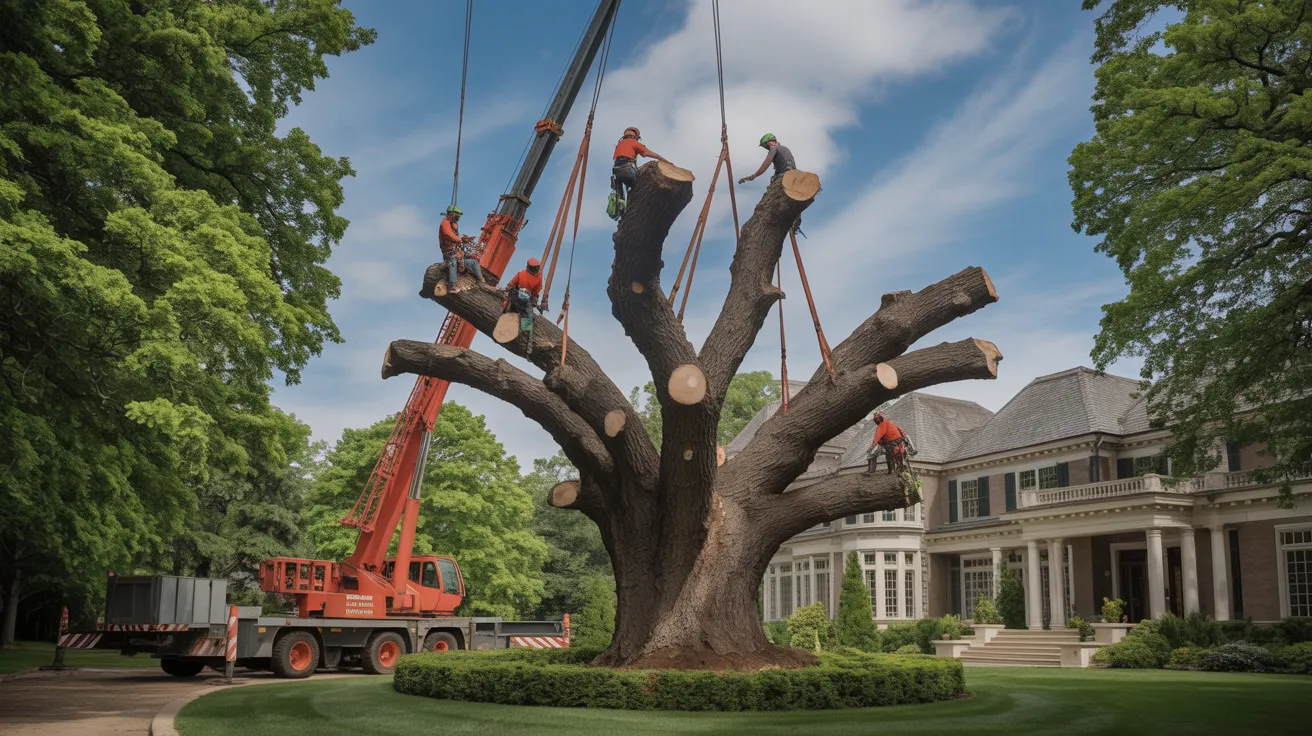
When space is available, they may bring down the tree in one planned direction. In tight locations, you can expect sectional disassembly, where limbs and trunk sections are lowered with ropes or a crane to prevent impact damage. Emergency removal crews prioritize immediate hazards, stabilize compromised sections, and clear access routes quickly. Once the trunk is down, they cut remaining wood to grade, remove debris, and examine for hangers or hidden tension. If requested, stump grinding is performed to eradicate the remaining stump and major surface roots safely.
How Do Tree Cutting and Landscaping Work in Tandem?
Tree removal and landscaping function as a single integrated process in practice since each cut changes grade exposure, sunlight, drainage, root interference, and usable space across your property. Before installing turf, beds, or hardscape, you must examine stump depth, disrupted soil, and debris routes.
After removal, you regrade to regulate runoff, address compaction, and protect foundations. Where equipment traveled, you may require soil aeration to restore oxygen exchange and improve water infiltration. Should adjacent trees remain, mapping important root zones and placing root barriers will decrease future conflict with walks, patios, and planting areas. Additionally, you match replacement plants to new light levels resulting from canopy loss. Proper sequencing of removal, cleanup, grading, and planting minimizes trip hazards, erosion, settlement, and preventable damage to underground utilities and irrigation lines.
Why Select Rochester Hills Landscaping Experts?
When you hire Rochester Hills landscaping experts, you get workers who know native soil properties, drainage layouts, and weather-based stress variables that affect enduring landscape performance. They use the right equipment for grading, tree work, and material handling, which decreases site damage and enhances installation accuracy. You also secure your property and the individuals on it, because experienced specialists follow established project execution procedures from planning through cleanup.
Climate Knowledge for Your Location
Since Rochester Hills weather moves between freezing and thawing patterns and spring saturation to summer heat and storm-driven loads, your landscape needs plant choices, grading, drainage, and tree risk management matched to local site conditions. Microclimate mapping by local specialists to pinpoint exposure, slope, soil moisture, salt impact, and cold pockets across your property advantages you.
That knowledge enables you to select plants with proper frost tolerance ratings, root-zone tolerances, and wind resistance. You also receive drainage improvements that minimize heaving, runoff concentration, and saturated soils that destabilize trees. Local crews can detect storm-vulnerable canopies, codominant stems, girdling roots, and pest stress quickly, before failure risk grows. You preserve structures, preserve plant health, and minimize avoidable hazards through every season on your site with climate-specific planning.
Appropriate Equipment Use
Even though landscaping may look straightforward, proper equipment use directly affects safety, performance, and the standard of service on your Rochester Hills estate.
You also benefit from strict equipment safety procedures and consistent machinery upkeep. Experts evaluate blades, hydraulic lines, guards, tires, and fuel systems prior to work begins. They adjust mowers, trimmers, stump grinders, and compact loaders to ensure optimal operation and better outcomes. If your project demands specialized attachments, they understand the load limits, performance tolerances, and manufacturer specifications. That technical expertise helps preserve your landscape property investment while maintaining every tool runs at peak performance.
Safe Project Completion
Protected project execution for landscaping jobs that involve many moving parts relies on systematic planning, risk control, and trained field supervision. Engaging Rochester Hills landscaping professionals lowers your exposure to unnecessary risks that can damage property, disrupt schedules, or hurt workers. Specialists assess grade, utilities, overhead clearance, soil conditions, and equipment access before work begins.
Established safety protocols are applied, exclusion zones are established, and tasks are sequenced to control traffic, falling debris, and tool interactions. You benefit from team training that includes machine operation, rigging, lifting technique, PPE compliance, and emergency response. Supervisors observe evolving site conditions, stop unsafe acts, and change methods as required. This organized method ensures your project compliant, effective, and incident-resistant while protecting structures, plant material, and all workers on site throughout each work phase.
What Landscaping Improvements Enhance Curb Appeal?
Begin with changes that enhance visual organization, landscape health, and lines of sight from the street. You should trim overgrown shrubs, eliminate deadwood, and raise lower tree limbs to clear pedestrian and driver visibility. Plant Native plants appropriate for Rochester Hills soils and drainage; they establish faster, use less irrigation, and minimize pest pressure. A Mulch update stabilizes soil moisture, controls weeds, and defines bed edges, but keep mulch away from trunks to prevent decay.
Following that, correct grading near walks and foundations, then edge beds accurately to create defined changes. Swap out damaged pavers, correct trip hazards, and enhance low-voltage lighting to illuminate entries, steps, and address numbers. You'll also boost curb appeal by concealing utility boxes, refinishing faded fences, and keeping turf density through overseeding, aeration, and precise fertilization schedules.
How Do You Find a Rochester Hills Tree Pro?
How should you choose a Rochester Hills tree pro who will not place your yard at needless risk? First, verify licensing, liability insurance, and workers' compensation. Request proof, not copyright. Confirm the staff adheres to ANSI Z133 safety standards, relies on certified arborists when diagnosis is essential, and documents site-specific hazards before work starting.
You should further check whether the company knows local ordinances, utility clearance requirements, and permit triggers for protected trees. Require a written scope that specifies rigging methods, debris control, stump handling, and traffic protection. Assess recent references for punctuality, cleanup, and incident history. If storm damage is probable, ensure the company delivers 24/7 response protocols and clear emergency contacts. A qualified pro outlines risk controls, protects the work zone, and leaves you with no unanswered safety questions before cutting commences.
How Should You Plan Your Next Yard Project?
Start by identifying your project goals, including scope, site constraints, and any tree or landscape hazards that could affect work methods. Next, set a realistic budget that covers labor, materials, equipment access, permits, and contingency costs for safety-related issues. When you establish clear objectives and accurate cost limits, you'll reduce project risk and enhance execution.
Define Project Objectives
Define the project's scope before any tree clearing, grading, or planting commences, because well-defined goals minimize safety risks, control costs, and prevent design conflicts. Identify exactly what you need enhanced: canopy clearance, drainage correction, slope stabilization, privacy screening, or usable outdoor space. Establishing a defined yard vision enables you order work correctly and prevent rework.
Next, document site constraints that affect execution. You should note overhead lines, root zones, drainage paths, easements, septic components, and visibility at driveways. Then establish output goals, such as erosion control, stormwater flow, shade reduction, or minimal-maintenance plant coverage. Align each target with your maintenance schedule so the finished landscape remains safe and functional over time. When your objectives are measurable and site-specific, contractors can recommend methods, equipment, and planting plans that fit your property safely.
Construct A Reasonable Budget
When your land clearing requirements are identified, determine a budget matching the location conditions, work sequence, and hazard level. Cost each activity one by one: tree removal, stump grinding, grading, drainage correction, soil amendment, planting, and cleanup. Itemized estimates allow you to review labor, equipment, disposal, permits, and material costs correctly.
Use local budget ranges as a baseline, then adapt for access constraints, utility conflicts, diseased trees, hardscape protection, and erosion control specifications. Do not overlook mobilization, crane use, traffic management, or emergency response premiums when hazards are detected. Contingency planning should be incorporated into the total, typically ten to twenty percent, because hidden root damage, unstable limbs, buried debris, and weather delays can change scope quickly. A realistic budget preserves safety, schedule, and long-term landscape condition without requiring dangerous shortcuts.
Typical FAQs
What Are Normal Tree Removal Costs in Rochester Hills?
In Rochester Hills, tree removal usually costs about $300 to $1,500, while massive, risky, or crane-access operations can surpass $2,500. Your average price depends heavily on scale factors, including trunk diameter, height, canopy spread, and nearness to structures or power lines. You'll also incur higher costs for emergency service, stump grinding, rigging complexity, and debris hauling. A site inspection guarantees the most protected, most detailed estimate.
Are Tree Removal Permits Required in Rochester Hills?
Yes, you could need a permit, like Theseus requiring Ariadne's thread before entering the maze. You should confirm local permit requirements with Rochester Hills, especially if the tree is designated as one of the city's heritage trees or sits in a conserved area. Private property doesn't inherently exempt you, so don't assume otherwise. You should verify zoning, diameter, species, and site conditions first. That step shields utilities, nearby constructions, and your liability during removal operations.
Does Homeowners Insurance Cover Storm-Damaged Tree Removal?
Homeowners insurance will typically cover storm-damaged tree removal if the tree harms a covered structure, blocks vehicle access, or poses a documented safety hazard. You'll need to verify policy limits, insurance deductibles, and policy exclusions before submitting a claim. If the tree falls without causing covered damage, removal often isn't covered. You should document the loss, photograph hazards, mitigate further damage safely, and contact your insurer promptly for claim instructions.
Can Removed Trees Be Recycled Into Mulch or Firewood?
You can usually recycle removed trees into mulch or firewood, avoiding usable wood from going to waste. You should inspect the material first, because diseased, chemically treated, or pest-infested wood shouldn't safely be converted for mulch or firewood. Sound wood allows you to chip branches for mulch and cut, split, and season logs for burning. This lowers disposal volume, enhances site safety, and restores value.
How Much Time Does a Standard Tree Removal Project Require?
Tree removal projects typically take 2 to 8 hours, though your exact schedule depends on tree size, site location, safety factors, and access for equipment. Expect compact trees to be brought down swiftly, while substantial or weakened specimens call for sectional removal and rigging setups. Trained crews moreover account for safety inspections, limb disposal, stump solutions, and site clearing. Your duration may increase further if utilities or crane apparatus are needed.
Final Considerations
When inspecting your property, treat every tree as a critical component in a living system. Should decay, lean, or dead limbs show impending failure, removal lowers hazard before gravity produces the worst-case scenario across your roof. When basic structure is sound, expert trimming restores clearance, balance, and wellness. With Rochester Hills authorities, assumptions is eliminated—you engineer more secure outcomes. Design your next project with defined priorities, noted dangers, and enhancements that make your landscape look sharp and perform optimally.